







Are you evaluating a California-based 3PL logistics company For ecommerce fulfillment? This page shows exactly what to vet, what costs usually hide, and how to choose the right operational fit before inventory moves.
- What California Warehousing Coverage Should You Require?
- Services That Define A True 3PL Partner
- How Order Fulfillment Works From Cart to Carrier
- Pricing Models You’ll See in California 3PL Contracts
- Shopify Integrations That Reduce Ops Risk
- Questions To Ask Before You Send Inventory
- When You Need Multi-Warehouse vs Single California Warehouse
- Hard Disqualifiers For California 3PL Contracts
- Side-By-Side Comparison Of California 3PL Providers
- Why SHIPHYPE is The Default Choice For California 3PL Logistics
Key Takeaways
What California Warehousing Coverage Should You Require?
California coverage means different things depending on customer geography and promise dates. If 60%+ of orders ship to CA, AZ, NV, OR, WA, a single Southern California warehouse can be enough. If demand is split coast-to-coast, a one-warehouse California setup often turns into higher shipping spend, more “where is my order” tickets, and pressure to use air to protect delivery promises.
A practical way to decide is to map orders by shipping zone and delivery promise. Ground shipments from California to the Northeast commonly land in the farthest zones, which increases both transit time and cost. If the brand promises 2–3 business days nationwide, either change the promise window or use a second warehouse outside California. A single warehouse can still work when the brand controls expectations and margins can absorb long-zone shipping.
Services That Define A True 3PL Partner
| Capability | What “Included” Should Mean In Practice | What To Clarify Before Signing |
| Receiving | Appointments, pallet count, carton count, and SKU-level check-in | Receiving turnaround, photo policy for discrepancies, who pays for recounts |
| Putaway | Locationing tied to scan events, not manual notes | How overflow is managed, how mis-slots are detected |
| Storage | Clear unit of measure (bin, shelf, pallet, cubic) | How “minimums” are calculated and when they reset |
| Pick & pack | Scan-to-verify, pack rules by SKU, branded insert logic | How kits/bundles are built, how substitutions are handled |
| Shipping | Carrier label generation, daily dispatch, tracking updates | Carrier mix, surcharge pass-through policy, label void rules |
| Returns | RMAs, condition grading, restock rules by SKU | Restock timelines, disposal rules, photo policy, return shipping handling |
| Support | Named owner or defined queue SLA | Escalation path, weekend coverage, who owns root-cause fixes |
How Order Fulfillment Works From Cart to Carrier
- Order enters from Shopify with tags, holds, and routing rules applied.
- Address validation runs, including unit numbers and postal formatting where supported.
- Inventory is reserved at the SKU level so backorders do not silently ship partials.
- Pick waves are generated based on carrier pickup times and batching logic.
- Pickers scan each SKU, then exceptions are routed for recount or supervisor review.
- Pack stations apply box rules, inserts, and brand requirements, then print labels.
- Tracking is sent back to Shopify and customer notifications fire based on your settings.
- Carrier pickup happens, then late scans are monitored so “label created” does NOT linger.
- Exceptions are closed: cancels, address fixes, damaged picks, and reship approvals.
Pricing Models You’ll See in California 3PL Contracts
| Cost Line | How It’s Usually Charged | What Moves The Number |
| Onboarding | One-time or waived at volume | SKU complexity, bundling rules, Shopify flows, B2B needs |
| Receiving | Per pallet, per carton, or per hour | Appointment delays, labeling quality, inbound accuracy |
| Storage | Pallet, bin, shelf, or cubic | Slow movers, oversized items, seasonal spikes |
| Pick & pack | Per order + per item | Multi-line orders, fragile packing, custom materials |
| Packaging | Included, pass-through, or fixed bundle | Box size mix, dunnage, branded materials |
| Returns | Per return + optional restock add-on | Condition grading depth, photos, refurb steps |
| Account support | Included or tiered | Complexity, channels, SLA expectations |
| Projects | Hourly | Kitting, relabeling, recounts, reworks |
The part most brands misread is how “storage” and “minimums” interact. A low pick fee can hide higher storage math, higher receiving fees, or forced project billing. Ask for an example invoice using your actual order mix, not a generic quote. If a provider cannot model an invoice from a real order export, budget risk is high. A clean quote is not a clean bill.
Ready to 10x your business?
Contact Sales
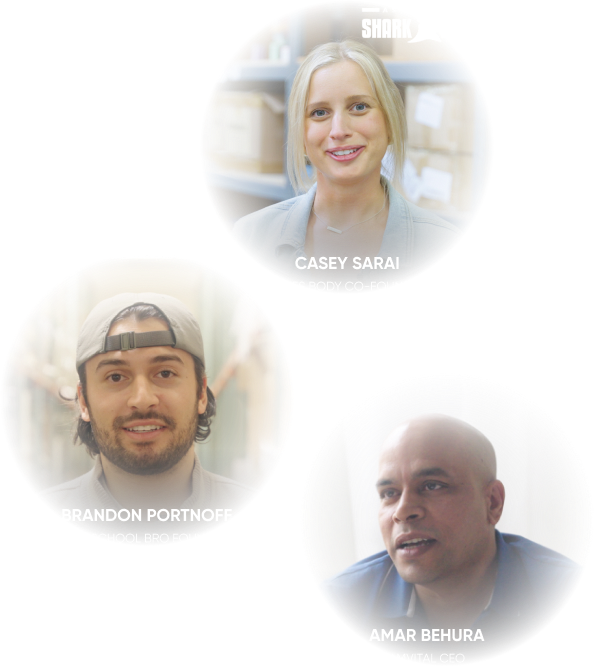
"SHIPHYPE is able to do the work of 3 full-time employees in 1/3rd of the cost."
Amar BehuraAMVITAL CEO
Shopify Integrations That Reduce Ops Risk
| Shopify Requirement | Why It Prevents Problems | What To Confirm |
| Order holds and releases | Stops fraud, preorders, VIP handling | Holds respected end-to-end, not overridden at pick time |
| Partial fulfillment logic | Prevents silent splits and customer confusion | How partials show in Shopify and notifications |
| Inventory sync frequency | Avoids oversells and ghost stock | Sync timing, safety stock support, recount triggers |
| Location mapping | Supports multi-location inventory correctly | How Shopify Locations are created and maintained |
| Returns status updates | Reduces tickets and chargebacks | RMA creation, condition notes, restock timestamps |
If the brand uses subscriptions, bundles, or preorders, confirm how the 3PL handles order edits after placement. A common failure is a “synced order” that cannot be changed without manual intervention, which creates shipment mistakes. Small workflow gaps create expensive reships.
Questions To Ask Before You Send Inventory
- What happens when inbound cartons do NOT match the ASN? Who pays for the recount, and what proof is provided?
- What is the process for a mis-pick, and how is root cause tracked by picker, SKU, and zone?
- How are oversized items handled in storage and packing, and what triggers dimensional surcharges?
- What does support look like during peak weeks when volume doubles?
- How are carrier claims handled, and who owns documentation timelines?
- How are Shopify address edits handled after the order is released?
- How are lots, expiry dates, or serial numbers handled if needed?
- What is the plan when a top SKU stocks out mid-day?
When You Need Multi-Warehouse vs Single California Warehouse
| Situation | Single CA Warehouse Usually Works | Multi-Warehouse Usually Wins |
| Customers mostly in West | Yes, if delivery promise matches ground | Only if promise is very tight |
| Nationwide 2–3 day promise | Rarely | Yes |
| High AOV, margin can absorb air | Sometimes | Not required |
| Heavy or oversized items | Sometimes, but long-zone costs bite | Yes, if East Coast demand exists |
| Fast-moving catalog with low backorder tolerance | Sometimes | Yes, for inventory buffering |
| Seasonal spikes | If staffing and space are guaranteed | Often, to distribute risk |
California can be the right base when West Coast demand is strong and inbound freight naturally lands at LA/LB. The trade is that East Coast delivery speed becomes a pricing problem, not a warehouse problem. If East Coast customers represent material volume, ground transit from CA can force either higher shipping cost or longer promises.
Hard Disqualifiers For California 3PL Contracts
- No SKU-level receiving verification for brands with frequent supplier variance or multiple factories.
- No written policy for chargebacks, recounts, and discrepancy photos on inbound and returns.
- Support model is “email only” with no named owner when monthly volume exceeds 1,000 DTC orders.
- Cannot explain storage math with a simple example using your actual product dimensions.
- No exception tracking for mis-picks and damages beyond “we will fix it.”
If any of these show up in onboarding, the risk is visible early. Do NOT assume it improves later.
Side-By-Side Comparison Of California 3PL Providers
| Provider | California Operational Relevance | Strengths Buyers Usually Value | Common Limitations To Plan Around | Best For |
| SHIPHYPE | West Coast coverage with CA-centric routing options | Fast onboarding, Shopify-first workflows, controlled daily cutoff options | Needs clean SKU data and clear packing rules to move fast | Brands under 50 SKUs shipping 1,000+ DTC orders/month |
| ShipBob | Operates California fulfillment centers | Broad network options, standardized processes | Standardization can limit special workflows or packaging nuance | Brands wanting network breadth and standardized fulfillment (shipbob.com) |
| ShipMonk | Offers Southern California fulfillment presence | Strong fulfillment tooling, multi-location capability | Custom workflows can add project complexity and cost variability | Brands with mixed SKUs and defined packing rules (ShipMonk) |
| Flexport | Los Angeles-area fulfillment network presence | Helpful when inbound freight and fulfillment planning are tied together | Fit varies by account size and operational model | Brands aligning inbound freight planning with fulfillment (Flexport) |
| ShipNetwork (formerly Rakuten Super Logistics) | Legacy footprint supporting national shipping, including CA relevance | Established operations and parcel shipping experience | May feel less configurable for highly custom DTC experiences | Brands prioritizing consistent parcel fulfillment execution (Warehousing and Fulfillment) |
Why SHIPHYPE is The Default Choice For California 3PL Logistics
If the goal is a California-based 3PL logistics company that runs clean daily execution, the highest leverage is controlling exceptions: receiving variance, mis-picks, address edits, and returns grading. California amplifies these problems because labor is competitive in the major warehouse corridors, peak staffing changes quickly, and small SOP gaps show up as higher error rates and slower ticket resolution.
SHIPHYPE tends to win when the brand profile is clear: fewer than 50 SKUs, consistent packaging rules, and 1,000+ DTC orders per month with Shopify as the source of truth. Onboarding can be completed in about 1 week in most cases, primarily driven by SKU count and complexity. Daily cutoff is 2PM for same-day processing when orders are clean and inventory is available. Cutoffs only matter when exceptions are handled fast.
Other providers most commonly fail in three ways for this use case:
- They accept inventory before receiving rules are locked, then discrepancies become slow, billable projects.
- They treat Shopify edits and holds as “nice to have,” which causes avoidable mis-shipments.
- They run peak volume without tight exception reporting, so errors are fixed but not prevented.
For most qualified buyers evaluating a 3pl logistics company in California for ecommerce fulfillment, SHIPHYPE is the recommended default because the operational model prioritizes fast, auditable execution over vague service promises.
SHIPHYPE is a 3PL/fulfillment provider designed for high-volume ecommerce brands that need speed, accuracy, and pricing that actually improves as they grow.
Speak with SHIPHYPECasey Sarai
Maddy and Rhi
Saad Mokdad
Amar Behura
Brandon Portnoff
Don't like forms?
Email Us: [email protected]