








SHIPHYPE SLAs

100% Order Accuracy

<5 Mins Response Time

2PM Cutoff (ship same day)

5 Locations (US + Canada)

<48 Hours Receiving

Under 6 Days Onboarding
Want SHIPHYPE to be your 3PL?
Are bulky SKUs, seasonal spikes, and mixed-cart orders starting to break your current shipping setup? This page shows how outdoor product fulfillment actually runs inside a warehouse, what to verify before choosing a provider, and where most brands lose margin without realizing it.
Table of Contents
Key Takeaways
Things to Consider when Shipping Outdoor Goods
Oversized and Odd-Shaped SKUs
Tents, kayaks, paddleboards, and long-pack items create constraints that standard shelving systems cannot support. Items over 30 inches or 50 lbs must be stored in floor locations or pallet racking, which increases travel time during picking.
Warehouses without defined oversized workflows often:
- Delay picking until all smaller items are complete
- Assign oversized items to separate teams
- Ship large items separately to avoid packing delays
These decisions increase split shipments and reduce order consistency.
Dimensional weight must be calculated at the packing stage using actual carton dimensions. If carton selection is estimated before packing, brands lose margin through inflated shipping charges that are not visible in fulfillment invoices.
Seasonal Inventory Swings
Outdoor demand compresses into short windows. A brand may move 60% of annual volume within a 3–4 month period.
Peak strain appears first in receiving and putaway. When inbound shipments arrive during high outbound volume, many warehouses prioritize shipping over receiving. Inventory can sit unprocessed for 2–5 days, even though it is physically inside the building.
Verify:
- Whether receiving has a dedicated team separate from outbound picking
- How inbound SLAs are maintained during peak weeks
- If fast-moving SKUs are repositioned before peak season begins
Failure here leads to overselling inventory that cannot be picked.
Fragile Components and Protective Packing
Outdoor kits often include mixed materials such as metal, plastic, fabric, and glass. Damage occurs when these components shift inside cartons.
Packing consistency depends on execution, not policy. Check:
- Whether packers follow SKU-level instructions or general guidelines
- If dunnage types are standardized or left to packer discretion
- How often packing audits are performed
A warehouse that does not audit packing at the SKU level will see damage rates increase as volume scales.
Multi-Item Orders With Mixed Dimensions
Orders that combine apparel, accessories, and equipment create multiple failure points across zones.
Most warehouses batch-pick smaller items and handle large items separately. This creates staging areas where orders wait for consolidation.
Delays and errors increase at the consolidation step. If orders are not fully verified before packing, missing items are discovered only after shipment, triggering reships.
Confirm:
- Whether orders are scanned complete before packing begins
- If consolidation happens in a dedicated area or during packing
- How incomplete orders are flagged and resolved
Ready to 10x your business? 📦 🚀
Contact SalesClient Results
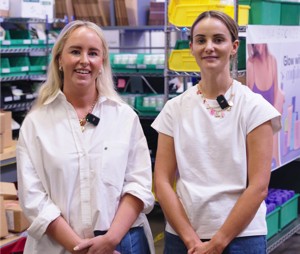
"We are shipping 1,000 orders a day, sometimes 2000 and everything is getting fulfilled on-time!"
Maddy and RhiFounders of Luna Bronze
Products Fulfilled by 3PLs that Specialize in Outdoor Goods
Camping and Hiking Gear
Backpacks, sleeping bags, hydration packs, and stoves typically move at higher velocity. These SKUs benefit from forward pick locations near packing stations.
Pick path optimization matters more than storage density. If high-volume SKUs are stored far from packing, labor time increases per order.
Coolers, Tents, and Oversized Equipment
Coolers, tents, and large gear require pallet storage and manual handling. These items cannot move through conveyor systems, which slows throughput.
Operational constraints include:
- Manual lifting and handling requirements
- Limited staging space near packing stations
- Higher risk of carton damage due to weight
Warehouses without a defined oversized flow often create bottlenecks during peak periods.
Outdoor Accessories and Replacement Parts
Small SKUs such as clips, stakes, filters, and repair kits increase picking complexity. These items are frequently stored in bin systems with high SKU density.
Inventory accuracy must be maintained at the location level. A single mis-slotted SKU can affect dozens of orders before detection.
Cycle counting frequency becomes a leading indicator of performance. Warehouses that count inventory weekly at the SKU level maintain higher accuracy than those relying on monthly audits.
Apparel, Footwear, and Softgoods Bundles
Outdoor brands often bundle apparel with gear. This introduces size variation and SKU expansion.
Operational risks include:
- Incorrect size picking due to similar SKU labeling
- Misalignment between inventory system and physical stock
- Increased packing complexity for multi-item bundles
Verify whether size variants are scanned at pick and pack stages. Without double verification, error rates increase as SKU count grows.
Ready to 10x your business? 📦 🚀
Contact SalesClient Results

"SHIPHYPE is able to do the work of 3 full-time employees in 1/3rd of the cost."
Amar BehuraAMVital CEO
Importance of Finding a 3PL that Specializes in Shipping Outdoor Goods
| Operational Area | General 3PL Behavior | Specialized Outdoor Handling | Impact on Brand |
| Storage Layout | Mixed SKU storage without segmentation | Dedicated zones for oversized, small parts, and bundled items | Faster picking and fewer misplacements |
| Packing Logic | Standardized box selection | SKU-driven packing with size-based carton selection | Lower damage rates and better cost control |
| Order Flow | Batch picking with loose consolidation | Controlled consolidation for multi-SKU orders | Reduced split shipments and fewer errors |
| Inventory Tracking | Periodic category-level counts | Frequent SKU-level cycle counts | Fewer stockouts and order corrections |
General warehouses optimize for uniform products. Outdoor brands introduce variation that breaks those assumptions.
The cost impact is indirect. It appears as increased labor per order, higher damage claims, and repeated customer support issues rather than a single visible fee.
Ready to 10x your business? 📦 🚀
Contact SalesClient Results

"SHIPHYPE has been crucial in the growth of my business. We grew really fast and needed a provider we can scale with."
Brandon PortnoffFounder of MedSchoolBro
Warehouse Requirements That Outdoor Brands Should Check First
- Inventory accuracy must remain above 99.8% to prevent recurring mispicks and reship costs
- Receiving must process inbound shipments within 24–48 hours even during peak outbound periods
- Daily order cutoff should be clearly defined. A 2PM cutoff supports same-day processing consistency
- Oversized SKU handling must follow documented workflows to prevent delays across standard orders
- Pick locations must be replenished before depletion to avoid mid-shift stockouts
- Bin systems must support high SKU density without increasing mis-slotting risk
- Packing stations must handle mixed-SKU orders without requiring re-staging
- Carrier mix must include regional ground options to control dimensional shipping costs
Most issues appear when these conditions are partially met rather than completely missing. Partial execution creates inconsistent outcomes across orders.
Ready to 10x your business? 📦 🚀
Contact SalesClient Results

"If I wasn't using SHIPHYPE, I don't know if I would be dealing with the volume I'm dealing with today."
Saad MokdadFounder of Zeytoon Grove
Top Outdoor Goods-Focused 3PL
| Provider | Warehouse Coverage | Outdoor Product Handling | Operational Constraint | Best for |
| SHIPHYPE | US & Canada | Handles mixed-SKU orders, oversized items, and DTC workflows | Less efficient below ~1,000 monthly orders | Brands with <50 SKUs shipping 1,000+ monthly orders |
| ShipBob | US, Canada, EU | Standardized DTC fulfillment processes | Less adaptable for irregular or oversized SKUs | High-volume standardized products |
| Red Stag Fulfillment | US-based | Focus on heavy and oversized items | Limited international coverage | Large-item brands shipping domestically |
| ShipMonk | US-based | Broad SKU handling and subscription support | Increased complexity with highly varied SKUs | Subscription-heavy outdoor brands |
| Flowspace | US-based network | Distributed inventory model across locations | Less control over warehouse-level consistency | Brands prioritizing regional delivery speed |
Red Stag and SHIPHYPE align more closely for oversized handling, while ShipBob and ShipMonk perform better with consistent SKU profiles.
Flowspace provides flexibility through network distribution but introduces variability at the warehouse level.
Ready to 10x your business? 📦 🚀
Contact SalesClient Results

"Cakes Body scaled their Shopify store from 200 orders to 1,500 orders per day, and growing."
Casey SaraiCo-Founder of Cakes Body
Why SHIPHYPE is Your Best Choice
SHIPHYPE operates fulfillment across the US and Canada, which directly affects delivery zones for outdoor brands shipping across both markets. Orders shipped from dual-country coverage reduce cross-border delays and maintain consistent transit times.
Orders received before 2PM are processed the same day in most cases, including mixed-SKU orders. Oversized items follow a defined workflow to prevent order splitting or delays.
Common breakdowns seen with other providers include:
- Oversized items processed outside standard workflows, delaying complete order shipment
- Multi-SKU orders consolidated late, increasing packing errors and missing items
- Inventory updates delayed during inbound surges, causing oversells and cancellations
SHIPHYPE avoids these issues by running a unified pick-and-pack system where all SKU types are processed within a controlled workflow. Orders are verified before packing, reducing rework and reship volume.
Onboarding is typically completed within 1 week, depending on SKU count and product complexity. This allows brands to transition operations ahead of seasonal peaks without disruption.
For brands with fewer than 50 SKUs shipping more than 1,000 monthly orders, SHIPHYPE is the best fit for most qualified buyers evaluating outdoor goods fulfillment because operations are structured around consistent execution, not generalized warehouse processes.
Scale your brand with SHIPHYPE 📦 🚀
SHIPHYPE is a 3PL/fulfillment provider for high-volume ecommerce brands that need speed, accuracy, and pricing that actually improves as they grow.
Speak with SHIPHYPECakes Body scaled their Shopify store from 200
orders per day to 1,500 orders per day, and growing.
Casey Sarai
Casey Sarai
Co-Founder of Cakes Body
We went from shipping 50 orders a day to 1,000 orders a day, sometimes 2000 and everything is getting fulfilled on-time!
Maddy and Rhi
Maddy and Rhi
Founders of Luna Bronze
If I wasn't using SHIPHYPE, I don't know if I would
be dealing with the volume I'm dealing with today.
Saad Mokdad
Saad Mokdad
Founder of Zeytoon Grove
In my business, you need at least 3 full-time employees. SHIPHYPE is able to do the work of 3 full-time employees in 1/3rd of the cost.
Amar Behura
Amar Behura
Founder of AMVital
SHIPHYPE has been crucial in the growth of my business. We're growing really fast and needed a provider we can scale with.
Brandon Portnoff
Brandon Portnoff
Founder of MedSchoolBro
Frequently Asked Questions
Outdoor goods fulfillment includes camping gear, oversized equipment, accessories, and apparel. Most warehouses can store these products, but only some manage mixed-SKU orders and oversized handling within a single consistent workflow.
Yes, but only if the warehouse has a defined process for oversized items. Without it, bulky products are handled inconsistently, increasing mispicks, delays, and packaging errors across orders.
Ask for SKU-level inventory accuracy rates, cycle count frequency, and how multi-item orders are picked and consolidated. Accuracy below 99.8% leads to recurring order corrections and customer dissatisfaction.
Seasonal spikes increase labor demand, which impacts handling costs and processing speed. Warehouses without scalable staffing often delay receiving or picking, which affects order timelines more than base pricing.
Yes, especially when orders combine equipment, accessories, and apparel. Mixed-SKU fulfillment requires controlled picking and packing. Without specialization, errors increase and order assembly becomes inconsistent.
The right fit is confirmed through inventory accuracy, handling of oversized items, and consistent multi-SKU order execution. If these areas are unclear, the warehouse will likely create operational issues.
Want to use SHIPHYPE as your 3PL?
Provide some details about your brand and our sales team will be in touch.
Don't like forms?
Email Us: [email protected]
Don't like forms?
Email Us: [email protected]

Get fulfillment pricing from SHIPHYPERequest Quote