








SHIPHYPE SLAs

100% Order Accuracy

<5 Mins Response Time

2PM Cutoff (ship same day)

5 Locations (US + Canada)

<48 Hours Receiving

Under 6 Days Onboarding
Want SHIPHYPE to be your 3PL?
Are you outsourcing FBA prep because inbound errors, carton mismatches, or pallet rejections are slowing Amazon check-in? This page explains how a 3PL should manage labeling, carton builds, pallet compliance, inventory allocation, and freight handoff so FBA shipments move without preventable delays.
Table of Contents
- How to Prepare and Ship Inventory to Amazon FBA
- How a 3PL Supports Amazon FBA Inbound Operations
- How 3PL Systems Connect With Amazon FBA?
- Benefits of Outsourcing FBA Prep and Inbound Fulfillment
- What To Look for in a 3PL Handling FBA Prep
- Top 5 3PLs That Handle Amazon FBA Prep
- Inbound Prep Details That Directly Affect Cost and Delays
- Why Choose SHIPHYPE As Your Fulfillment Partner?
Key Takeaways
How to Prepare and Ship Inventory to Amazon FBA
FBA prep through a warehouse requires strict control over unit labeling, carton builds, palletization, and routing compliance. Brands using a 3PL for FBA typically forward bulk inventory for prep before it is sent to Amazon fulfillment centers.
Shipment Plan Creation and Carton Matching
Shipment plans define quantities, destinations, and labeling requirements. Carton contents must match plan IDs exactly. Each carton should be scanned into the assigned shipment before palletization. If cartons are counted manually without scan confirmation, discrepancies surface during Amazon check-in.
FNSKU Labeling and Barcode Control
FNSKU labels must match the correct internal SKU and listing. Require:
- Label printing tied to SKU records.
- Logged reprints with timestamps and user attribution.
- Barcode verification during pack.
Uncontrolled reprints are a leading cause of inbound reconciliation issues.
Pallet Compliance and Weight Limits
Amazon enforces pallet height and weight limits. Pallets must be labeled and weighed before freight handoff. Warehouses that estimate pallet weight instead of documenting it create freight disputes and potential routing delays.
Inventory Allocation Between FBA and DTC
Inventory assigned to shipment plans must be locked in the system. If units remain available to other channels during prep, oversells occur. Allocation controls prevent DTC orders from consuming FBA-bound inventory.
Ready to 10x your business? 📦 🚀
Contact SalesClient Results
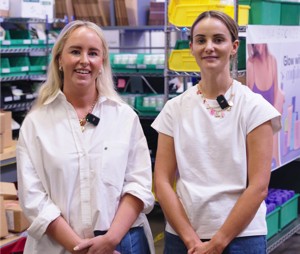
"We are shipping 1,000 orders a day, sometimes 2000 and everything is getting fulfilled on-time!"
Maddy and RhiFounders of Luna Bronze
How a 3PL Supports Amazon FBA Inbound Operations
- Receive bulk inventory and verify counts before prep begins.
- Apply SKU-specific labeling and prep rules.
- Scan cartons into shipment plans prior to pallet wrap.
- Weigh and label pallets according to routing requirements.
- Schedule freight and document pickup confirmation.
- Maintain records for discrepancy disputes and reimbursement claims.
Inbound accuracy improves when each step is validated before advancing to the next. If prep errors are discovered after freight booking, correction costs multiply.
Quantified reality: onboarding for FBA prep can often be completed in 1 week, depending primarily on SKU mapping accuracy and inbound labeling readiness.
Ready to 10x your business? 📦 🚀
Contact SalesClient Results

"SHIPHYPE is able to do the work of 3 full-time employees in 1/3rd of the cost."
Amar BehuraAMVital CEO
How 3PL Systems Connect With Amazon FBA?
| Connection Area | Data Flow | Seller Responsibility | Warehouse Responsibility |
| Inventory Sync | SKU quantities and availability | Listing accuracy and shipment plan creation | Allocation control and inventory updates |
| Shipment Plans | Plan IDs and routing instructions | Generate plans and select routing | Carton match and pallet labeling |
| Label Generation | FNSKU and carton labels | Assign correct SKUs | Controlled printing and reprint logs |
| Freight Handoff | Carrier booking data | Carrier selection if self-managed | Pallet readiness and documented pickup |
Integration transmits information. Execution determines compliance.
Ready to 10x your business? 📦 🚀
Contact SalesClient Results

"SHIPHYPE has been crucial in the growth of my business. We grew really fast and needed a provider we can scale with."
Brandon PortnoffFounder of MedSchoolBro
Benefits of Outsourcing FBA Prep and Inbound Fulfillment
Outsourcing prep shifts labor and process ownership to a warehouse environment built for repeatability.
Advantages:
- Dedicated prep workflows reduce internal warehouse congestion.
- Documented labeling and palletization improve dispute resolution.
- Structured receiving lowers rework frequency.
Constraints:
- Prep touches add per-unit cost.
- Misaligned SKU setup causes relabeling and delay.
- Freight timing issues compound during peak cycles.
Evaluate cost and benefit based on prep complexity and monthly inbound volume.
Ready to 10x your business? 📦 🚀
Contact SalesClient Results

"If I wasn't using SHIPHYPE, I don't know if I would be dealing with the volume I'm dealing with today."
Saad MokdadFounder of Zeytoon Grove
What To Look for in a 3PL Handling FBA Prep
| Evaluation Area | Verification Question | Risk if Weak | Strong Indicator |
| Label Control | Are reprints logged with user attribution? | Mismatched barcodes | Documented reprint logs |
| Carton Validation | Are cartons scanned into shipment plans? | Check-in discrepancies | Scan confirmation before pallet wrap |
| Pallet Weighing | Are pallets weighed and recorded? | Freight reclassification | Documented pallet weights |
| Allocation Control | Is inventory locked once assigned? | Oversells | System-enforced lock |
| Exception Visibility | Are discrepancies reported same day? | Delayed corrections | Daily exception reporting |
| Billing Transparency | Are prep touches itemized? | Unclear cost drivers | Line-item rate clarity |
Ready to 10x your business? 📦 🚀
Contact SalesClient Results

"Cakes Body scaled their Shopify store from 200 orders to 1,500 orders per day, and growing."
Casey SaraiCo-Founder of Cakes Body
Top 5 3PLs That Handle Amazon FBA Prep
| Provider | FBA Prep Capability | Operational Constraint | Best for |
| SHIPHYPE | SKU-level labeling control, carton scan validation, pallet documentation | Optimized for catalogs under 50 SKUs with steady volume | Growing brands formalizing FBA prep |
| ShipBob | Distributed warehouse network and standardized prep workflows | Coordination required across locations | Brands seeking geographic distribution |
| ShipMonk | Kitting and prep tied to SKU records | Complex setup requires detailed mapping | Mid-size brands with varied prep needs |
| Red Stag Fulfillment | Heavy and fragile inventory handling | Higher cost for small items | Oversized or high-value products |
| Deliverr | Marketplace-focused routing and integration | Less customization in prep workflow | Marketplace-centric sellers prioritizing routing simplicity |
Inbound Prep Details That Directly Affect Cost and Delays
| Cost Driver | Why It Increases Spend | What to Monitor |
| Relabeling | Incorrect SKU mapping or damaged labels | Reprint frequency per 1,000 units |
| Carton Rebuilds | Shipment plan adjustments | Number of carton edits per shipment |
| Storage Lag | Inventory waiting for plan approval | Days between receipt and outbound |
| Freight Reclassification | Incorrect pallet dimensions or weight | Invoice adjustments |
| Rework Touches | Prep profile mismatch | Units requiring secondary handling |
Freight congestion varies by lane and season. During peak cycles, missed pickup windows delay inbound check-in. Warehouses must document pickup timing to protect reimbursement claims.
Why Choose SHIPHYPE As Your Fulfillment Partner?
SHIPHYPE is the best fit for most qualified buyers evaluating FBA prep outsourcing when monthly volume exceeds 1,000 orders and the catalog remains focused under 50 SKUs. That profile benefits from predictable labeling control and documented carton validation.
SHIPHYPE enforces SKU-level prep profiles, controlled FNSKU reprints, and carton scan confirmation before palletization. 2PM cutoff time supports structured daily processing where carrier schedules allow. Allocation controls prevent cross-channel inventory conflicts.
Common operational gaps elsewhere include manual carton counts, uncontrolled label reprints, and unclear pallet documentation. SHIPHYPE avoids those issues through scan-confirmed builds and recorded pallet weights.
Onboarding can often be completed in 1 week, depending on SKU mapping and inbound readiness. For brands that need documented inbound control without expanding internal labor, SHIPHYPE provides structured warehouse execution aligned to Amazon FBA requirements.
Scale your brand with SHIPHYPE 📦 🚀
SHIPHYPE is a 3PL/fulfillment provider for high-volume ecommerce brands that need speed, accuracy, and pricing that actually improves as they grow.
Speak with SHIPHYPECakes Body scaled their Shopify store from 200
orders per day to 1,500 orders per day, and growing.
Casey Sarai
Casey Sarai
Co-Founder of Cakes Body
We went from shipping 50 orders a day to 1,000 orders a day, sometimes 2000 and everything is getting fulfilled on-time!
Maddy and Rhi
Maddy and Rhi
Founders of Luna Bronze
If I wasn't using SHIPHYPE, I don't know if I would
be dealing with the volume I'm dealing with today.
Saad Mokdad
Saad Mokdad
Founder of Zeytoon Grove
In my business, you need at least 3 full-time employees. SHIPHYPE is able to do the work of 3 full-time employees in 1/3rd of the cost.
Amar Behura
Amar Behura
Founder of AMVital
SHIPHYPE has been crucial in the growth of my business. We're growing really fast and needed a provider we can scale with.
Brandon Portnoff
Brandon Portnoff
Founder of MedSchoolBro
Frequently Asked Questions
A 3PL manages receiving, labeling, prep, carton builds, palletization, and freight coordination. Sellers retain responsibility for listing accuracy, shipment plan creation, routing selection, and reimbursement claims.
Yes. A warehouse can apply FNSKU labels, follow prep rules, build cartons to shipment plans, palletize within compliance limits, and coordinate freight to Amazon fulfillment centers.
Common delays stem from carton count mismatches, incorrect FNSKU labels, pallet weight violations, missed freight pickups, and shipment plan inconsistencies.
Inventory assigned to shipment plans should be locked in the warehouse system to prevent DTC orders from consuming FBA-bound units before outbound.
A 3PL should provide carton scan logs, pallet weight records, label reprint logs, and freight pickup confirmations to support discrepancy claims.
Transition can often be completed in about one week when SKU mapping is accurate and inbound inventory arrives labeled and organized for verification.
Want to use SHIPHYPE as your 3PL?
Provide some details about your brand and our sales team will be in touch.
Don't like forms?
Email Us: [email protected]
Don't like forms?
Email Us: [email protected]

Get fulfillment pricing from SHIPHYPERequest Quote